|
 |
Problem
In the Eastern Planning Region and the Municipality of Shtip, a
large part of public buildings are still heated with fuel oil or
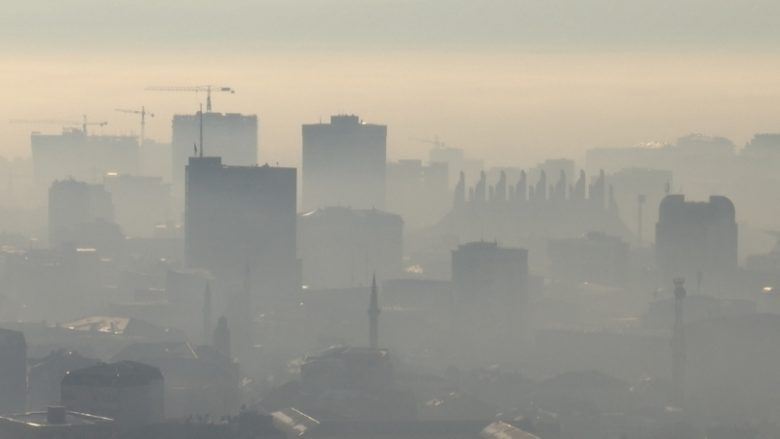
oil. This contributes to emissions of PM₂.₅, PM₁₀, CO₂ and other
pollutants. At the same time, institutions have limited
financial and technical capabilities for introducing low-carbon
technologies, and the public is insufficiently informed about
their benefits.
The proposed technology has already been proven through
practical application in Macedonia, while in several European
countries such systems have been used for years. However, they
are still almost not applied in public buildings in our country.
According to the public register of the Ministry of Environment
and Physical Planning, out of 42 analyzed public institutions in
the Municipality of Shtip, 30 are heated with oil and consume
around 381,000 liters of fuel annually. (https://registers.mk/public_buildings/).
Moreover, a large part of the institutions do not have
documentation on possible solutions to reduce oil consumption
and air pollution
Solution. A small introduction.
There are three types of solar collectors:
For obtaining hot water (thermal collectors)
For obtaining electricity (photovoltaic panels)
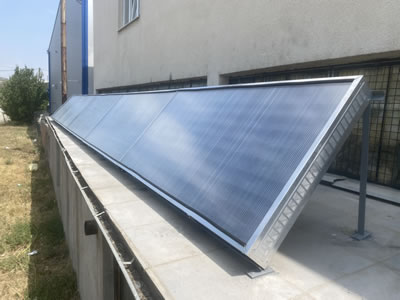
For obtaining hot air (air collectors) They purify and heat the
air |
 |
 |
 |
 |
 Air-source solar collectors represent an efficient and
sustainable solution for local energy transformations, enabling
direct use of solar energy for air heating. They play a key role
in reducing dependence on fossil fuels, improving energy
efficiency and fostering the green energy market.
The main task of air-source solar collectors is to filter the
outside air and save energy for space heating or for industrial
needs (dryers, textile industry...)
These systems enable decentralized production of thermal energy,
which leads to cost reduction and increased energy independence
for households, institutions and industry. The integration of
air-source solar collectors with other renewable energy sources
can create more flexible and self-sustaining energy communities.
How Does a Solar Air Heating System
Work?
-
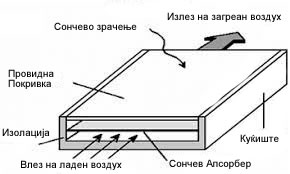
A solar air heating system uses the
sun's energy to heat fresh air. Solar radiation warms the absorber
inside the collector, while a fan draws air through the collector, where
it is heated. The warm, clean air is then supplied to the building or to
a drying system, providing free, renewable, and environmentally friendly
heating.
-
The system operates
without burning fossil fuels, reducing both energy costs and CO₂
emissions while improving indoor air quality. Depending on the
application, it can operate as a standalone heating solution or as a
supplementary system integrated with an existing heating installation.
-
In the context of a sustainable future,
the use of these technologies contributes to CO2 reduction and environmental
protection, enabling more economical and environmentally friendly heating,
especially in industrial processes such as drying agricultural products.
Using air solar systems in fruit dryers can offer several advantages:
Energy efficiency: Air solar systems can harness solar energy directly from
above, maximizing exposure to sunlight during the day. This energy can be
used to supply hot air to fruit dryers, reducing the need for grid
electricity or fossil fuels.
Reduced environmental impact: Using solar energy reduces dependence on
fossil fuels, thereby reducing greenhouse gas emissions and the overall
environmental impact. This aligns with sustainable practices, which are
increasingly important in modern agriculture.
Cost Reduction: While the initial investment in air-to-air solar systems can
be significant, over time, they can lead to significant cost savings by
reducing energy bills. Additionally, in some regions, there may be
incentives or subsidies for adopting renewable energy technologies.
Customization: Air-to-air solar systems can be designed and positioned to
optimize sunlight exposure based on the specific location and requirements
of the fruit drying technology. This flexibility allows for customized
solutions that maximize energy production.
Integration with other technologies: Air-to-air solar systems can be
integrated with other technologies such as battery storage systems or energy
management systems to further improve efficiency and reliability. This
integration can help store excess energy for use during periods of low
sunlight or high energy demand.
By installing air solar fruit drying systems, food processors can not
only improve the efficiency and sustainability of their processes but also
reduce costs and environmental impact in the long term.
| |
|